Step into any well-designed workspace these days and you’re likely to notice something quietly working in the background. Not the IT systems or the air con. Not even the coffee machine. It’s something far simpler, more ancient, and more alive.
Plants.
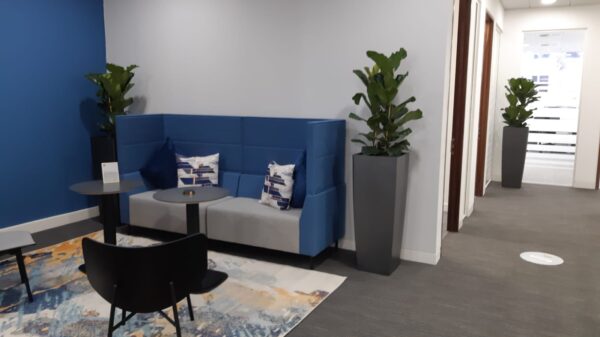
Not just plonked in the corner for show, but thoughtfully woven into the fabric of the space. Around meeting tables, near soft seating areas, running like a green thread through collaboration zones and quiet pods alike.
It’s not a design trend. It’s a workplace necessity.
Because in the modern world of activity-based working, where employees move between different spaces depending on their task, we need something that keeps us grounded. Something that brings consistency, comfort, and calm. And that’s exactly what plants provide.
What Is Activity-Based Working, Really?
Let’s start with the basics.
Activity-based working is about freedom. The freedom to choose where and how you work, depending on what you’re trying to get done. Need to focus on a detailed report? Head to a quiet booth. Brainstorming with the team? Grab a spot in the breakout area. Making calls? Use the acoustic pod. The idea is to design the workspace around the work, rather than the other way round.
It’s flexible, dynamic, and increasingly popular, especially in organisations that want to encourage autonomy and collaboration. But it also presents new challenges. When people no longer sit in one place, how do you create a sense of continuity? How do you foster belonging in a space that shifts every day?
This is where nature steps in.
Why Plants Matter More Than You Think
At first glance, office plants may seem purely decorative. But their role in the workplace runs much deeper than aesthetics. Plants influence how we feel, how we behave, and how we perform, often without us even realising.
A growing body of research supports this:
- A University of Exeter study found that employees were 15% more productive in offices that included even a small number of plants.
- The Human Spaces Global Report showed that workers in environments with natural elements reported 15% higher levels of wellbeing and were 6% more productive.
- NASA’s clean air study famously demonstrated that certain houseplants can remove up to 87% of air pollutants in just 24 hours.
These aren’t fluffy statistics. They translate into fewer sick days, improved focus, better decision-making, and a workplace that people actually want to spend time in.
The Tangible Benefits of Office Plants
So, what exactly do plants do for us in an activity-based environment? Here are the most meaningful, human-centred benefits.
1. They Help Us Breathe Easier
Literally. Plants act as natural air filters, reducing carbon dioxide levels and removing toxins like formaldehyde and benzene. In open-plan areas where multiple people are working, the air can quickly become stale. A well-placed peace lily or spider plant can make all the difference.
For employees who suffer with headaches, fatigue, or minor respiratory complaints, the presence of air-purifying plants can be a genuine game-changer.
2. They Improve Focus and Reduce Stress
The act of simply seeing greenery has a calming effect on the brain. It reduces the body’s stress response and improves cognitive performance. In flexible workplaces, where people often move between high-stimulation and low-stimulation zones, plants help ease that transition.
They soften the hard lines of furniture and glass. They create visual privacy without closing off space. And they offer a moment of pause in an otherwise fast-paced day.
3. They Support Acoustic Comfort
Ever noticed how noisy some modern offices can be? Hard floors, high ceilings, and minimal partitions often mean sound travels further than it should.
Plants, particularly those with large leaves and dense foliage, can absorb and diffuse sound, reducing echo and background noise. This makes it easier to concentrate, especially in shared areas where several different tasks may be happening at once.
4. They Help People Feel at Home
In activity-based offices, people might not sit at the same desk from one day to the next. That can be liberating, but it can also feel impersonal. A consistent presence of plants throughout the space adds a comforting sense of familiarity.
It’s the difference between feeling like a guest and feeling like you belong.
5. They Reflect Company Values
Let’s be honest. Clients, candidates, and colleagues all notice the details. A workplace filled with healthy, well-cared-for plants speaks volumes. It shows that you take wellbeing seriously. That you care about sustainability. That you’re creating a place where people matter.
In this sense, plants are more than just décor. They’re a visual expression of your culture.
Designing with Plants In Mind
So how can you integrate greenery into your workspace in a way that genuinely adds value? Here are a few simple but effective ideas:
- Create green dividers between zones using tall planters or freestanding frames. These help shape the flow of the space without putting up walls.
- Use trailing plants from shelving units to soften the look of collaborative areas.
- In quiet zones, opt for calming, structured greenery like rubber plants, which offer a visual sense of stillness.
- Make entrances and reception areas count. This is where first impressions are formed, and plants can instantly lift the atmosphere.
If you’re working with a facilities partner or interior designer, consider discussing options like integrated planters, self-watering systems, or even living walls.
It’s Not About Perfection. It’s About Presence.
You don’t need to turn your office into a jungle to see results. Even a handful of well-chosen plants, thoughtfully placed, can transform the tone of a workspace.
And the effects aren’t just physical. They’re emotional. They’re cultural. When people feel looked after, they tend to look after their work in return.
Plants help us feel more human in an increasingly digital world. In spaces driven by choice and activity, they bring stability. In buildings full of change, they bring life.
Final Thoughts
In the world of workplace design, it’s easy to focus on furniture, floorplans, and tech. But sometimes, it’s the quietest elements that have the greatest impact.
Plants don’t just fill space. They shape it. They improve it. And, most importantly, they improve us.
So next time you’re redesigning a workspace, rolling out an ABW strategy, or simply wondering how to make your office feel a little more like home, start with something green.
You’ll be surprised what takes root.