Walk into any well-designed office and you’ll likely see more than just desks and screens. There’s something softer. Greener. Alive. Plants have become a familiar feature in workplace interiors, but the way we display them matters just as much as the plants themselves.
Planters aren’t simply vessels for greenery. They’re design tools in their own right. They help shape space, guide flow, and inject personality into otherwise functional environments. In short, they play a subtle but powerful role in how we experience a workplace.
The overlooked detail that ties a space together
In recent years, office design has shifted from being purely practical to becoming more intentional. We now expect more from our spaces. A modern office should support focus, collaboration, and wellbeing, while also reflecting a company’s values and culture.
That’s why small design details, like the choice of planters, have a big impact.
A well-chosen planter doesn’t just hold a plant. It anchors a room. It defines boundaries in open-plan layouts. It adds rhythm to a hallway. And, when done right, it helps create a sense of calm, connection, and care, all of which employees and visitors instinctively notice.
Plants alone can transform a space. But planters give those plants meaning. They elevate greenery from afterthought to feature.
Modern: clean lines, quiet confidence
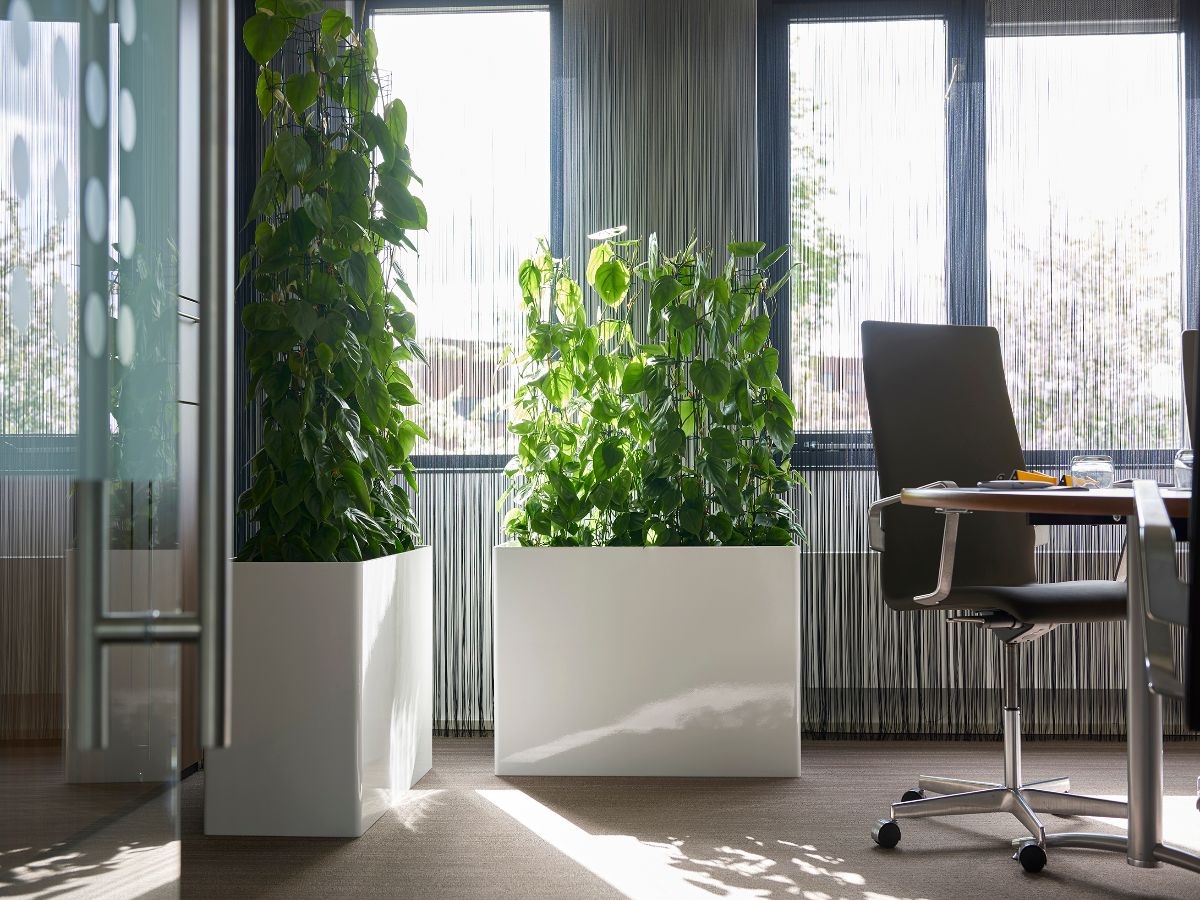
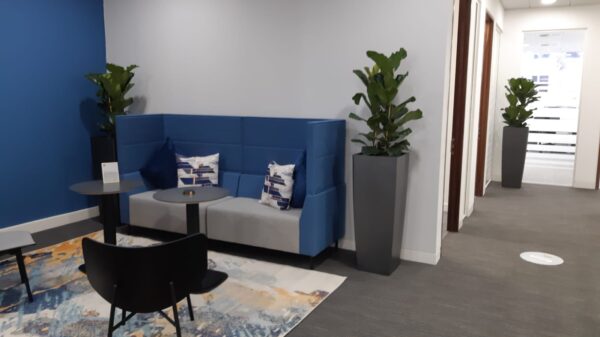
Modern planters are sleek, minimal, and architectural. They tend to come in metal, concrete, or fibreglass with neutral tones – black, white, grey, charcoal. Shapes are sharp and purposeful. Think cylinders, cubes, or rectangular troughs with no ornamentation.
They’re made to pair with contemporary office spaces. Glass meeting rooms. Polished floors. Streamlined desks and standing stations. Anywhere that values order and precision.
These planters work best with sculptural plants – like snake plants, rubber trees, or ZZ plants – that have form and structure. Together, they create a language of confidence and control. They’re subtle, but they speak volumes.
Use modern planters in rows or symmetrical arrangements to add balance. Place them in corridors, along windows, or flanking doorways to create clean lines of sight.
They don’t distract. They direct.
Rustic: textured, earthy, and grounding
Where modern planters are cool and composed, rustic planters are warm and lived-in. Terracotta pots, timber boxes, ceramic urns, or metal vessels with a slight patina = these planters carry texture and character.
They suit offices with exposed beams, brick walls, timber floors, or repurposed industrial spaces. They also work beautifully in more casual, creative, or collaborative environments where a lived-in feel matters more than polished perfection.
Rustic planters bring a softness that puts people at ease. They invite conversation. They create contrast in spaces dominated by screens and hard edges. And they tend to pair well with more relaxed, leafy plants like pothos, ferns, or trailing ivy.
They also speak to sustainability. Reclaimed, repurposed, or handmade materials suggest thoughtfulness. Craft. Story.
In spaces that want to feel more human, rustic planters help lead the way.
Minimalist: soft presence, strong impact
Minimalist planters are quiet. They don’t shout for attention. But they do leave an impression.
Typically slim, seamless, and softly coloured – whites, taupes, sand, stone – minimalist planters fade into the background while still doing important visual work. They help frame a plant. They soften a corner. They add balance and calm.
They work well in boardrooms, focus zones, boutique studios, or any space where clutter is kept to a minimum. Their role is to create breathing room.
Minimalist planters often integrate with furniture – built into bench seating, shelving, or cabinetry. This kind of design shows restraint and refinement. It’s about doing more with less.
In busy, high-functioning environments, minimalist planters act like punctuation. They help the eye rest. They help people breathe.
Planters that do more than look good
While planters add to a space’s visual language, their role isn’t purely aesthetic. They’re also functional.
They guide movement.
Strategically placed planters can create gentle divisions within an open-plan office. No need for extra walls. Just clever zoning.
They improve acoustics.
Plants help absorb sound. And with the right placement, planters can reduce echo in large or high-ceilinged rooms.
They support wellbeing.
People feel better in spaces with plants. We know this. Stress drops. Focus improves. Even short exposure to greenery can have a positive psychological effect.
They reflect your values.
When planters are clearly chosen with care – not just plonked in a corner – they signal attention to detail. They say this business is thoughtful. Considered. Human.
In competitive markets, that perception matters.
Choosing the right planters for your space
There’s no single right answer. It depends on your brand, your team, and your space. But here are a few good rules of thumb:
Start with scale.
A huge planter in a small room feels imposing. A tiny pot in a large space gets lost. Match the proportions to the room.
Be consistent, not identical.
You don’t need 20 matching planters. But you do want them to feel part of the same family – in tone, material, or shape.
Think in groups.
Three planters together often make more impact than one. It feels designed. Intentional.
Use them to anchor, not just accessorise.
Planters can lead the eye, frame an entrance, or define a breakout area. They’re not just extras. They’re part of the structure.
Consider maintenance.
If you’re not into high-maintenance greenery, go for low-effort plants in self-watering containers. Or work with a plant care partner to keep things healthy.
From filler to feature
Too often, planters are treated as an afterthought. Something to ‘add at the end’ to make the space look finished.
But when they’re used with intention — when they’re chosen to reflect your brand, complement your space, and support your team — they become much more than a finishing touch.
They become part of the architecture.
Part of the feeling.
Part of what makes a space memorable.
Looking to refresh your workplace?
We’ll help you choose planters that do more than just hold plants.
They’ll hold attention. Shape space. Support your people.