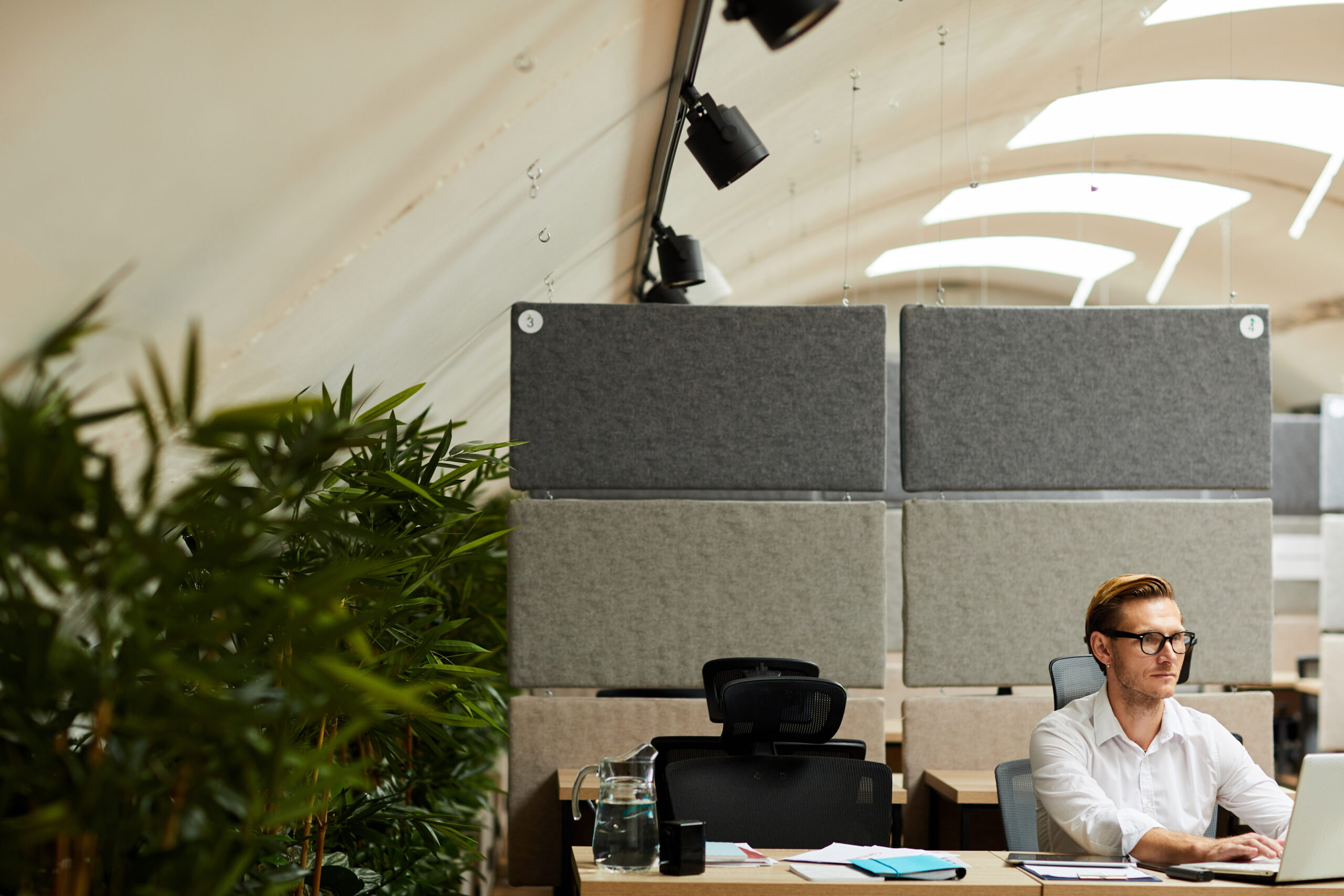
As more companies adopt open-plan office layouts, a new challenge has emerged: noise pollution. With fewer walls and partitions to block sound, conversations, phone calls, and general office chatter can quickly create a disruptive environment. This constant noise can make it difficult for employees to concentrate, increasing stress and reducing productivity. While many solutions exist, one often overlooked but highly effective option is the use of office plants.
Yes, plants can do more than just purify the air and beautify a space—they can also play a significant role in sound absorption and noise reduction. Incorporating plants into office design is not only an aesthetic choice but a practical one that can improve the acoustic environment of the workplace.
The Science Behind Plant Acoustics
The ability of plants to absorb sound lies in their physical structure. The leaves, branches, and stems of plants are irregularly shaped, which helps to scatter sound waves and prevent them from bouncing around the room. In essence, plants act as natural sound buffers.
Large, leafy plants with thick canopies are particularly effective at absorbing sound waves. These plants break up sound frequencies, reducing the reverberation that often occurs in open spaces. Additionally, the soil and pots in which the plants sit can also play a role in dampening noise, as the combination of organic matter and air within the soil acts as an additional layer of sound absorption.
The more greenery you introduce into an office, the more pronounced the acoustic benefits. A well-designed biophilic office layout that incorporates strategically placed plants can significantly reduce background noise, making the work environment much more conducive to concentration and focus.
Best Plant Varieties for Noise Reduction
Not all plants are created equal when it comes to absorbing sound. If noise reduction is a priority, it’s important to select plant varieties that are best suited for the task. Below are some of the top contenders for improving office acoustics:
- Ficus Trees
Ficus plants, such as the Ficus benjamina (Weeping Fig), are excellent choices for offices. With their dense foliage and tall structure, they can act as a natural barrier to sound. They thrive in indoor environments and require minimal care, making them perfect for busy office settings.
- Rubber Plants (Ficus elastica)
Known for their broad, waxy leaves, rubber plants are another great option for noise reduction. Their thick leaves help to absorb sound waves, while their robust structure can act as a partition in open spaces. Rubber plants are also resilient and thrive in indirect light, making them a low-maintenance solution for office greenery.
- Peace Lilies
Peace Lilies, with their elegant leaves and striking flowers, are not only beautiful but also effective at absorbing both high and low-frequency sounds. They are particularly useful in smaller office spaces or meeting rooms where noise levels need to be kept to a minimum.
- Large Palms (e.g., Areca Palm, Bamboo Palm)
Palms are perfect for creating a tropical ambiance while also improving acoustics. With their tall, sprawling fronds, large palms such as the Areca Palm or Bamboo Palm are highly effective at breaking up sound waves. They can be placed in corners or along walls to help mitigate noise from adjacent workstations.
- Monstera Deliciosa (Swiss Cheese Plant)
The unique, fenestrated leaves of the Monstera Deliciosa not only add a decorative touch to any office but also provide a textured surface that disrupts sound waves. Its large, vibrant leaves are perfect for absorbing noise in common areas like lounges or collaborative workspaces.
Strategic Plant Placement for Maximum Impact
For office plants to have the greatest impact on noise reduction, strategic placement is key. Large plants should be positioned near high-traffic areas, such as meeting rooms, break areas, or near printers and photocopiers where noise tends to accumulate. Grouping plants together in clusters or creating green dividers between desks can also help to further reduce sound levels in open-plan offices.
Additionally, hanging plants or vertical gardens can be used to soften noise in areas with hard surfaces, such as concrete floors or glass walls, which tend to reflect sound.
Conclusion
Incorporating plants into your office not only improves the visual appeal and air quality but also creates a quieter, more peaceful workspace. By selecting the right plant varieties and positioning them strategically, you can effectively reduce noise pollution and improve overall acoustics in an open-plan office. It’s a natural, sustainable solution that benefits both employees and the environment—proving once again that plants are much more than just decoration.